Admin
The guide to college and university erp integration time and on premise server solution in 2026
How Long Does College,Universities ERP Integration Take? Timelines & On-Premises Solutions
Colleges and universities today are not simply searching for another software provider. They need a technology partner who understands how Indian institutions actually work — from admissions and examinations to NAAC processes, finance, and day-to-day administration.
That is where MyLeading Campus® makes a difference.
Built in India for Indian educational institutions, MyLeading Campus® helps affiliated colleges, autonomous colleges, deemed universities, and private universities manage their complete campus operations from one place. From admissions and academics to examinations, finance, student communication, and NAAC-related work, the platform is designed to reduce manual work and simplify daily operations.
Proudly Indian. Built for Indian Institutions.
MyLeading Campus® is not just another ERP company. It is a proudly Indian education technology platform trusted by institutions across the country.
The platform is:
DPIIT Registered Startup
ISO 9001:2015 Certified
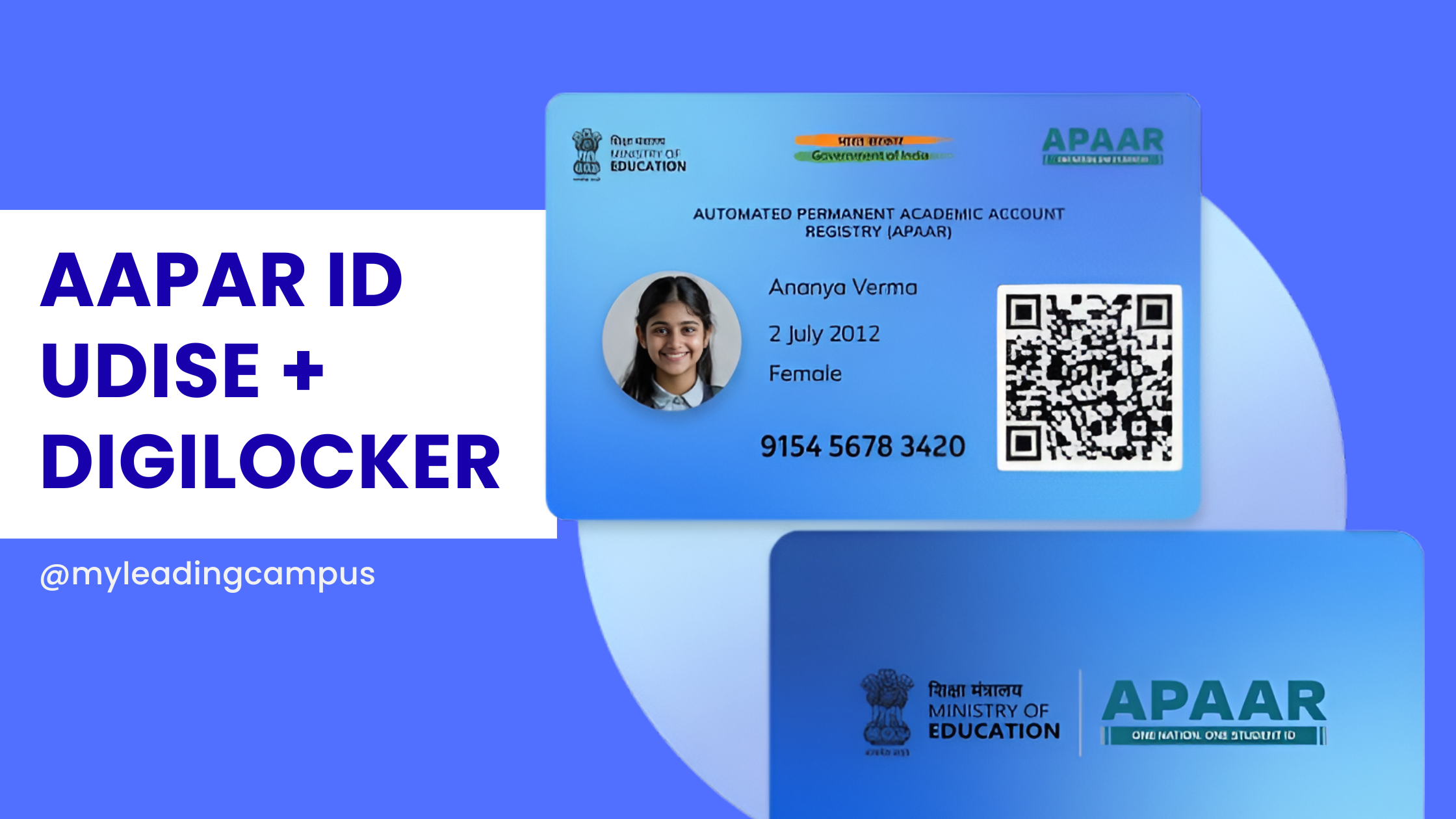
DigiLocker Authorized Partner
Google for Education Partner
These recognitions matter because educational institutions today need secure, scalable, and compliant systems that can grow with them.
Every institution has its own way of working. Some follow CBCS structures, some are autonomous, while others have specific university or NAAC requirements. MyLeading Campus® is flexible enough to adapt according to the institution’s academic structure and operational workflow instead of forcing institutions to change their process.
Designed for Colleges, Universities, and Autonomous Institutions
Many software platforms are either school-focused or too generic. MyLeading Campus® is specifically designed keeping Indian higher education institutions in mind.
If you are searching for a complete ERP for colleges, you can also explore:
Best College Management Software in India
Best University ERP for Autonomous and Deemed Universities
The software supports:
Admission Management
Alumni Management
Training and Placement Management
Student Information System
Examination & Result Management
NAAC Documentation
Outcome Based Education (OBE)
Attendance Management
Fees & Finance
HR & Payroll
Hostel & Transport
Alumni Management
Learning Management System
AI-enabled Automation
Mobile Apps for Students, Faculty, Parents & Management
Fast Integration Support Without Long Waiting Time
One of the biggest concerns institutions face while changing ERP software is integration delays.
Most universities worry about questions like:
“How long will payment gateway integration take?”
“Can this connect with our CRM?”
“Will Tally integration take months?”
“Can we use our existing systems together?”
MyLeading Campus® focuses heavily on quick integration timelines so institutions can start operations faster.
Payment Gateway Integration in Just 3 Days
Online fee collection has become essential for colleges and universities.
MyLeading Campus® supports integration with multiple payment gateways including:
Razorpay
PhonePe
NTT DATA
PayU
JioPay
These integrations can usually be completed within 3 working days.
This helps institutions start online fee collection quickly with secure payment tracking, automated receipts, reconciliation, and student notifications.
CRM and Communication Integration Within 48 Hours
Admissions and lead management have become highly competitive.
To support admission teams and counselors, MyLeading Campus® integrates with:
Salesforce
Zoho
Tata Tele telecalling systems
Most of these integrations can be completed within 48 hours depending on access availability.
This helps institutions:
Track admission leads
Automate follow-ups
Record telecalling activities
Manage counselor performance
Improve admission conversion rates
Calendar and Meeting Platform Integration
Modern institutions use multiple tools for online classes, meetings, interviews, webinars, and counseling.
MyLeading Campus® supports fast integration with:
Calendly — within 24 hours
Zoom — within 24 hours
Google Meet — within 24 hours
Microsoft Teams — within 24 hours
This makes online scheduling and virtual academic operations easier for faculty and administration teams.
Tally and SAP Integration for Finance Teams
Finance departments often hesitate before changing ERP because accounting integrations are critical.
MyLeading Campus® supports integration with:
Tally
SAP
Implementation time is generally around 7 working days.
This helps institutions synchronize:
Fee collection
Financial reports
Accounting entries
Payroll records
Finance reconciliation
without duplicate manual work.
Moodle Integration in Just 2 Days
Many colleges and universities already use Moodle for LMS and online learning.
MyLeading Campus® can integrate with Moodle within 2 working days, helping institutions connect academics, attendance, assignments, and learning activities under one ecosystem.
Customization Support Based on Institutional Needs
Every college and university operates differently.
Some institutions follow strict autonomous workflows. Some require complex examination patterns. Others need special approval hierarchies, biometric integrations, or department-level custom modules.
MyLeading Campus® is highly customizable according to institutional requirements.
Customization support may include:
Custom admission workflows
Autonomous examination structures
Specialized grading systems
Department-specific approvals
Custom reports
NAAC data requirements
Multi-campus management
University-affiliated workflows
The implementation team works closely with institutions to understand operational challenges before deployment.
On-Premises Server Deployment Available
Not every institution prefers cloud-only hosting. Many universities and government institutions want their data to remain within their own campus infrastructure due to internal policies, security requirements, or compliance reasons.
MyLeading Campus® also provides On-Premises Deployment options, where the ERP can be hosted directly on the institution’s own physical servers inside the campus.
Today, the platform supports thousands of active users and continues to grow across schools, colleges, and universities in India.
This gives institutions more control over:
Data security
Internal server policies
Network access
Storage management
Internal IT governance
Institutions can choose between:
Cloud Hosting
Hybrid Deployment
Fully On-Premises Campus Server Hosting
depending on their requirements.
Why Institutions Trust MyLeading Campus®
Educational institutions prefer long-term reliability over temporary promises.
MyLeading Campus® focuses on:
Easy-to-use interface
Faster implementation
Quick integrations
Reliable support
Affordable pricing
Customization flexibility
Indian education compliance
Dedicated onboarding assistance
The platform is already supporting thousands of daily users and continues to scale across schools, colleges, and universities in India.
Final Thoughts
Choosing an ERP is about much more than just ticking boxes on a feature list. The real test is how naturally the software blends into the way your staff already works. You need those custom updates and tool integrations to happen quickly and smoothly, without bringing your campus's daily routine to a halt
MyLeading Campus® combines:
Fast integration timelines
Strong customization capability
Indian education expertise
Secure deployment options
Scalable infrastructure
Reliable support
for colleges, universities, autonomous institutions, and deemed universities across India.
If your institution is planning ERP implementation, digital transformation, NAAC preparation, online admissions, or centralized campus management, MyLeading Campus® offers a practical and scalable solution designed specifically for Indian higher education institutions.
Ready to Upgrade Your Campus? Contact us today
Frequently Asked Questions (FAQs)
1. Is MyLeading Campus® only for universities or can colleges also use it?
MyLeading Campus® is made for both colleges and universities. Whether your institution is affiliated, autonomous, private, or deemed, the software can be adjusted according to your way of working.
2. We already use other software. Can MyLeading Campus® work with them?
Yes, definitely. Many institutions already use tools like Tally, Moodle, Salesforce, Zoho, Zoom, or payment gateways. MyLeading Campus® can connect with these systems so you do not have to start everything from zero.
3. How quickly can online fee payment be started?
In most cases, payment gateway integration can be completed within around 3 working days. This helps colleges start online fee collection faster without long waiting periods.
4. Can we keep the software on our own college server?
Yes. If your institution does not want cloud hosting, the software can also be installed on your own campus server. Many universities prefer this for internal policies and better control over data.
5. Is the software difficult for staff and faculty to use?
No. The system is designed in simple and easy format so faculty, admin staff, and students can use it without much technical knowledge. Training and support are also provided by the team.
6. Can the software be customized for our university rules and process?
Yes. Every college and university works differently. Some have different exam structures, grading systems, approval processes, or NAAC requirements. MyLeading Campus® can be customized according to your institution’s needs.
7. Does MyLeading Campus® help with NAAC work?
Yes. Many colleges use the software to manage records, reports, academic data, and department activities which are useful during NAAC preparation and documentation.
8. How much time does implementation usually take?
It depends on the size of the institution and the modules required. Basic setup can start quickly, while bigger customizations and integrations may take a little more time.
9. Will students and teachers get mobile app access?
Yes. Separate mobile apps are available for students, faculty, parents, and administrators for attendance, notices, assignments, fees, communication, and academic updates.
10. Is MyLeading Campus® an Indian company?
Yes. MyLeading Campus® is a proudly Indian ERP platform built specially for Indian educational institutions. It is also DPIIT Registered, ISO 9001:2015 Certified, DigiLocker Authorized Partner, and Google for Education Partner.
Read more