



Holistic Progress Card (HPC) Guide for Schools: NEP 2020
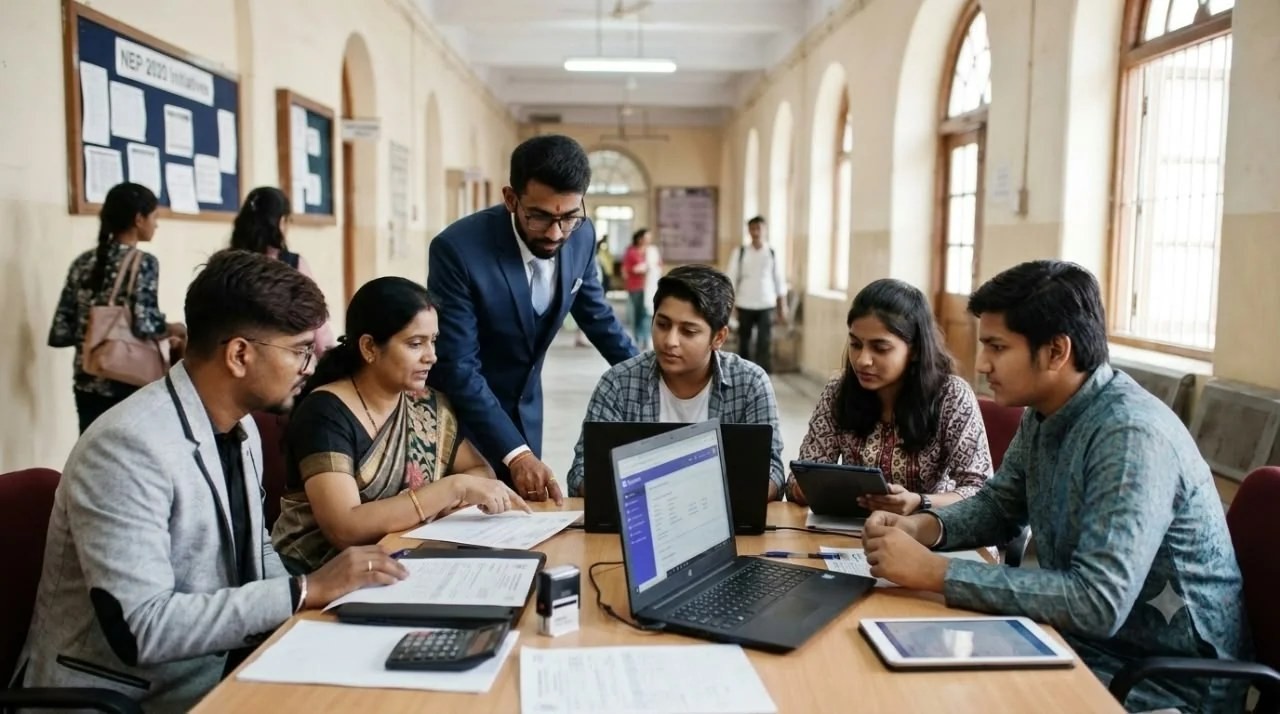
Holistic Progress Card: Why NEP 2020 Is Changing the School Report Card
Anyone who has worked in a school knows that last week of term.
The staff room table disappears under report cards. Somebody is hunting for a red pen. Marks are already in, so it’s just the remarks column now, and after the twentieth card they all start to read the same way. “Good.” “Can do better.” “Needs to be more regular.” The cards go home, parents look at the percentage first (always the percentage), and then everyone moves on.
Now along comes the Holistic Progress Card, and it wants a lot more than that. How does the child think? How do they get along with others? What do they enjoy, what do they find hard, what do the parents notice at home? It even asks the child what they think of their own learning.
The first time most teachers see the format, they have one question. Where is the time going to come from?
Fair enough. That’s really what this post is about.
What is a Holistic Progress Card, exactly?
Put simply, the Holistic Progress Card (HPC) is the report card NEP 2020 wants schools to move to. It still has marks, but it also looks at how a child is growing in thinking, emotions, social skills and physical development, and it doesn’t rely only on the teacher’s view. The child, their classmates and their parents all get a say.
Where did this come from? Paragraph 4.35 of NEP 2020 talks about a “holistic, 360-degree, multidimensional” progress report that connects school and home. PARAKH, NCERT’s national assessment centre, then worked out what that would look like and built templates for the foundational, preparatory and middle stages. NCERT put out sample cards in March 2024 and asked the states and UTs to get started.
CBSE brought out manuals for the younger classes first. Then, in November 2025, it took the HPC up to Classes 6 to 8, and self, peer and parent assessment came along with it.
There’s a line of thinking in PARAKH’s note on the preparatory-stage card that I like a lot. It treats the HPC as the story of how a child is developing, rather than a scoresheet. Keep that in mind and most of the design starts to make sense.
How is it different from what we do now?
Quickly, side by side:
|
|
The report card we’re used to |
Holistic Progress Card |
|
What it shows |
Marks, grades |
Skills, attitude, well-being, and learning too |
|
Who fills it |
Subject teachers |
Teacher, child, classmates, parents |
|
Based on |
Tests, mostly |
Observation, projects, activities, tests |
|
When |
End of term |
Bit by bit, across the year |
|
Used for |
Ranking, promotion |
Understanding the child, planning help |
Marks don’t go anywhere, by the way. They just aren’t the whole picture anymore.
Who writes what?

Diagram of the four inputs to a 360-degree Holistic Progress Card: teacher, self, peer and parent
The teacher still carries most of it. They watch how each child is doing against the goals for that stage and pull in whatever evidence they have: classwork, projects, test results.
Then the child gets a turn. In Class 1 that might mean pointing to a happy or a confused face. A Class 7 student might write two lines on what went well in a project and what didn’t.
Classmates chip in after group work, usually with a few guided questions. Did she share her ideas? Did he listen when others spoke?
And parents tell you what you can’t see from the classroom: sleep, screen time, a new hobby, a child who has suddenly gone quiet at home. A lot of schools collect this just before the PTM, which is sensible.
The card grows up with the child
A Class 1 card and a Class 7 card are not supposed to look alike.
With the little ones, from pre-primary up to Class 2, it’s mostly the teacher observing. How do they play, how do they settle in, how are they handling routines? Self-assessment is pictures, not sentences.
From Class 3 to 5, children begin to put their thinking into words. Peer feedback starts showing up after group activities, and teachers describe where a child stands in each area instead of just putting down a grade.
By Class 6 to 8, there’s much more weight on projects, inquiry work, role plays and portfolios, and the self, peer and parent sections become a proper part of the card.
One piece of advice, if you’re planning the rollout. Don’t change every class in the same term. Pick the stage your teachers feel most confident about, try it for one full term, ask them honestly what was painful, and then widen it. Rushed rollouts produce forty cards that all sound alike, and parents can tell.
So where does the extra work come from?
Not from the card itself, really.
Teachers already know their students. They know who won’t put her hand up even when she knows the answer, who can’t sit still after lunch, who quietly helps the new boy with his notebook. That knowledge exists. The trouble is getting it out of their heads and onto forty separate cards by a fixed date.
In most schools the time goes into the same few places. Notes are scattered across diaries, phones and loose sheets. Remarks get written from scratch, child by child. Somebody spends days chasing the parent forms. And at the end, everything is typed out again into the final format.
Let me put a rough number on it. Say a class teacher has 40 children and spends around 25 minutes assembling each card. That’s nearly 17 hours in one term, just for putting cards together. If collecting a little every week and starting from templates brings it down to 10 minutes a child, that teacher saves about 10 hours. (These are example figures. Do the sum with your own.)
Rolling it out in your school
There isn’t one correct method, but this order tends to work well.
1. Start with the official templates. Get the PARAKH or CBSE card for each stage and line its sections up against the assessment calendar you already follow. State-board schools should check whether their SCERT has its own version. Andhra Pradesh, for instance, has put out HPC training material for its teachers.
2. Sit down and agree on the levels. An hour per stage is enough. Decide together what “beginning”, “developing” and “proficient” mean for each goal, otherwise every teacher will read them differently.
3. Collect a little, every week. One observation or one photo per child per week. That’s it. Much easier than trying to remember October in December.
4. Do the self and peer parts in class. Right after a project or a unit, while it’s fresh. If you send them home, half won’t come back.
5. Hear from parents before the PTM. A short form on your parent app about a week ahead means the meeting starts with both sides already on the same page.
6. Check a handful, then send. A coordinator can look through a sample for quality. Share digitally, and print only for the families who need it.
Some things that go wrong (and how to avoid them)
The most common one? Schools just add more columns of grades and call it an HPC. That misses the point completely. The descriptive part is what parents will actually read.
Copy-paste remarks are a close second. Parents compare notes in the WhatsApp group, and they will spot five children with the identical sentence. Start from a comment bank if you like, but each remark should still sound like it was written about that particular child.
Then there’s the last-minute rush. The HPC runs on evidence gathered over the term, and cramming it into the final week shows, both in the cards and in your teachers’ faces.
Don’t skip the parent briefing either. Plenty of parents have only ever seen percentages. Ten minutes at the first PTM explaining how to read the card saves a lot of confused phone calls later.
And please be careful with privacy. A child’s reflections and notes about their well-being are personal. Limit who can open them, and handle them as personal data under the DPDP Act.
Where MyLeading Campus comes in
The card is only as good as the records behind it, and in most schools those records live in too many places. MyLeading Campus® brings them into one system.
Marks, grades and teacher remarks sit in the Progress Report module, term after term. Attendance is already recorded, so nobody has to count registers. Assignments, notes and events keep a trail of the projects and activities you’ll need for the co-curricular sections. And when you need parent inputs, or just want to remind everyone about the PTM, app notifications reach them directly.
Thinking of moving away from paper report cards this year? Try it free for 30 days and see how your records come together. No setup fee, no commitment. (If admissions are also on your plate, our piece on DigiLocker admission verification covers the other end of the year.)
Questions we hear a lot
Is the Holistic Progress Card compulsory?
NEP 2020 asks states and boards to move towards HPC-style reports, and NCERT has asked states and UTs to begin. CBSE has been bringing it in one stage at a time. Exactly when it applies to you depends on your board and your state, so keep an eye on their circulars.
Which classes does it cover?
PARAKH has cards for the foundational stage (up to Class 2), the preparatory stage (Classes 3 to 5) and the middle stage (Classes 6 to 8). CBSE extended its own HPC to the middle stage in November 2025.
So are marks gone?
No. Test results are still there. They just share the page with skills, attitude and well-being, and there’s written feedback instead of only numbers.
Will parents understand it?
Most do, once someone takes them through it the first time. Instead of a single percentage they see where their child stands in each area, what the teacher noticed, and what the child said about their own learning. Many parents actually find it more useful.
Is it connected to the APAAR ID?
Not that we’ve seen so far. There’s no official requirement linking the two yet. Still, if your HPC records are digital, they’ll be ready to travel with the student as APAAR IDs and digital records become normal.
Can the whole thing be done digitally?
Yes, and a lot of schools are doing exactly that. Observations and inputs are collected online through the term, and the final card is generated from them. It saves time and makes sharing with parents much easier.
Before you go
Strip away the format and the templates, and the HPC is really asking one thing. How well do we know each child in the room?
Most teachers know far more than any report card has ever had space for. This one finally gives them that space, and it asks the child and the parents to join the conversation. Do it a little at a time and it stops feeling like extra work. Honestly, it may be the most truthful report a school sends home all year.
Want to see how this could look in your school? Book a free demo and we’ll walk you through it with your own classes and calendar. For a free demo and consultation, call +91 98743 44994.